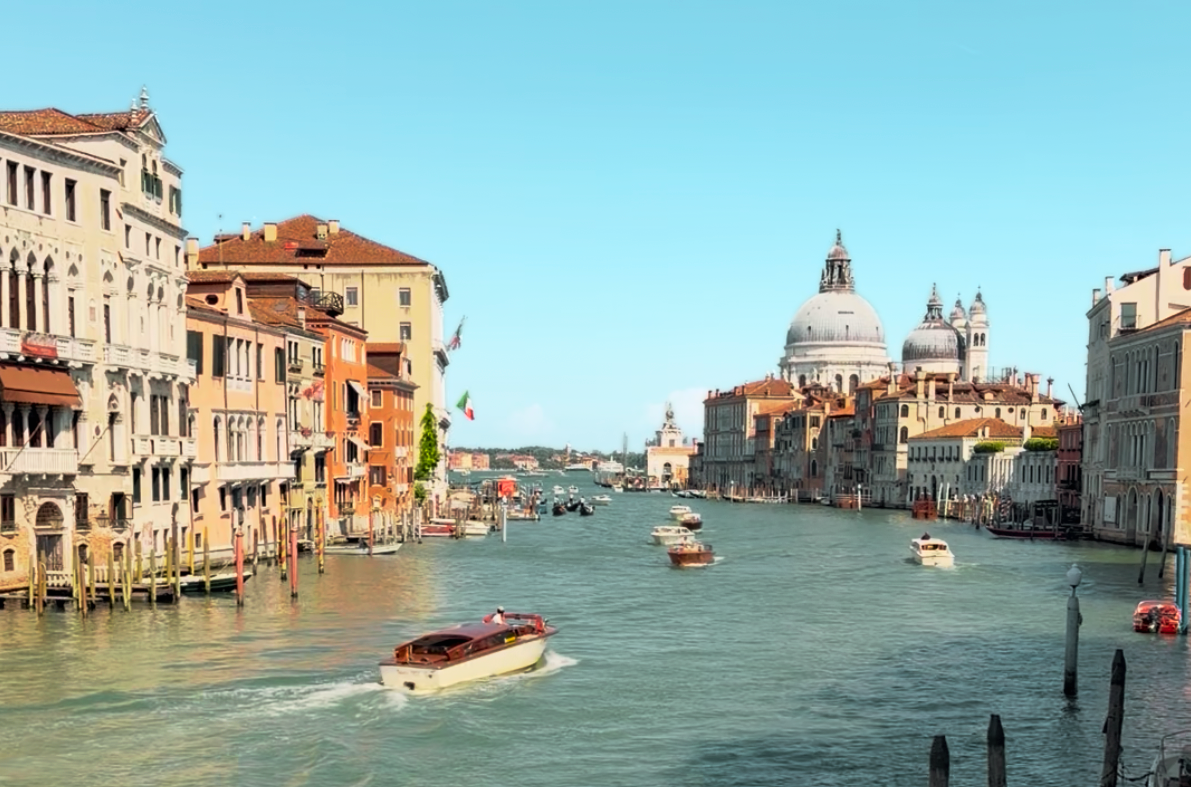
The 61st Venice Art Biennale asks a quiet question: what happens when we pay attention to lower frequencies? Curated by the late Koyo Kouoh under the title ‘In Minor Keys’, this year’s Biennale tunes into the emotional, social and civic registers that rarely dominate headlines but shape how we live and what we build.
Boster Group’s roundtable, this year co-hosted alongside the World Economic Forum, spanned continents and disciplines in equal measure: museum directors, artists, architects, philanthropists, corporate partners and city builders from across the UK, USA, France, Italy, Germany, Brazil, UAE, Singapore, Hong Kong and South Africa. Grounded in this breadth of perspectives, the conversation explored how cultural institutions, corporations and cities build and sustain what is truly lasting at a time when the systems around them increasingly reward speed, scale and visibility.
Boster Group has been convening leaders from across the cultural, corporate and civic worlds at the Venice Biennale for over a decade, and few have opened under quite so much external pressure and political turbulence. With the contrast between theme and context making for one of the most reflective conversations to date, our discussion demonstrated that the ideas, takeaways and relationships developed in the room have a way of enduring beyond the noise around them.
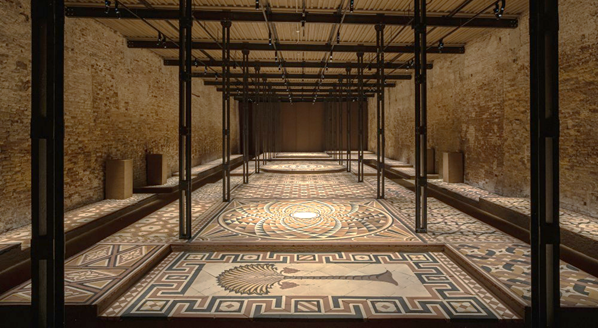
“Dana Awartani: May your tears never dry, you who weep over stones,” 2026 Saudi Arabia Pavilion
Global reach, local roots
A thread that ran through the conversation was the notion that global institutions flourish when they infuse local character and perspectives into their practice from the beginning. The Guggenheim — which has museums in New York, Bilbao, Venice, and Abu Dhabi scheduled to open later this year — offers a powerful illustration of how a strong central framework with autonomy at each site can create institutions that not only endure but thrive. From the intimate curves of the Solomon R. Guggenheim Museum in New York to the domestic warmth of Peggy Guggenheim’s former palazzo in Venice, each museum has been built around the character and community of the city they inhabit; each have their own director, staff and urban relationship, meaning the global brand remains coherent and the local identity intact. This allows the communities around each site to feel a true sense of belonging.
The Guggenheim’s model has been built over decades and across cities and generations. For individual cultural leaders, we see a similar process play out: one participant spent fourteen years growing an institution from a single space into one of Asia’s most significant platforms for contemporary art. The institution is now deeply rooted in the city and trusted by its designers and community. Now Deputy Director and Head of Art at a major cultural site in Hong Kong, he spoke about how becoming embedded in a place takes years of sustained commitment to local artists and audiences. Moving to a new city invariably means starting that process anew, carrying the lessons of one place into the unique demands of another. The global and the local must be in constant, productive negotiation.
The case for slow
The systems that surround cultural institutions and their corporate partners are, for the most part, built for speed. Quarterly results, annual cycles, the pressure to evidence impact in the short term. Our roundtable directly challenged this logic.
A senior figure leading experiential creativity for one of the world’s largest technology companies offered the morning’s clearest argument for investing in the long game. He described how a single creative commission with a globally recognised artist, grounded in clarity of intent and genuine respect for her vision, grew over a decade into a true creative partnership built on accumulated trust and a shared body of work. The relationship reached the point where the artist herself chose to integrate the company’s product into her work, not because she was asked to, but because a decade of honest creative exchange had garnered real trust and respect. This kind of authenticity can only be earned, not commissioned.
The observation that stayed with the room was simple but significant: the return on long-term partnership is real, measurable and compounding. The organisations that understand this, in any sector, are the ones that find themselves with quiet relationships that have produced years of subtle, compounding influence for their brand and cultural reach.
Trust the audience, trust the place
If the first takeaway is about how institutions relate to place, the third is about how they relate to people. Specifically, about what happens when you stop assuming you know what a community needs and start building the conditions for them to tell you themselves.
A participant responsible for commissioning art for over four million people daily offered an illustration of what happens when institutions stop deciding what communities need and trust them to choose for themselves. For years, the default position had been that an artist must come from a neighbourhood to speak for it. The change she made opened the selection process to panels drawn from the communities where the work would actually sit, rather than deciding on their behalf. By trusting communities to recognise and respond to great work, the selections became bolder, more exciting and more resonant with the people they were made for.
Another participant, an architect, pointed out that she uses the same instinct to shape a very different practice. Commissioned to design a major London pavilion, she resisted the urge to superimpose her city’s own identity onto London. Instead, she chose to work with the methodology at the heart of her practice: reading beneath the surface and listening for what a place holds that is not immediately visible. This drew her into working with the communities, bookshops, radio stations and gathering spaces that had quietly maintained London’s cultural life for generations. What she built was, in the end, a response to them rather than a statement about herself.
Conclusion
The conversation that unfolded kept returning, in different forms, to the idea that the structures connecting corporations to cultural institutions cannot be transactional or built overnight. The partnerships that matter most share the same qualities as the best cultural work itself: rooted in place, responsive to people and built over time. They require the rigour to understand an audience before creating for it and the intent to listen before acting. The returns on that commitment are real and measurable: in cultural credibility, in audience trust and in lasting influence.